
How to Secure a Sliding Glass Door From Break-Ins
To secure a sliding glass door from break-ins, do three things in this order: block the track so the door can’t slide, stop the door from being lifted out of its frame, and add a lockable security screen so the opening stays protected even with the glass open. Boss Security Screens OC installs security screens for sliding glass doors from $4,500 installed across Orange County and nearby Long Beach, Cerritos, Lakewood, Whittier, Hacienda Heights, Downey and Norwalk, with a 15-year warranty on product and labor. That price is for a 2-panel slider; see the full price list.
Published September 2026 · Prices confirmed September 2026 · By Boss Security Screens OC
Call or text (714) 716-2036 · Mon–Sat until 7 pm · License #1132573
Book a free consultationCall (714) 716-2036
What’s included with a sliding door security screen
- A free in-home consultation: we measure your sliding door.
- A fixed quote on the spot.
- A sliding screen panel custom-made for your opening: any size, any shape, any color.
- Mounted on the outside of your existing slider, so your glass door stays.
- A lock on the screen panel.
- Installed by our own certified team.
- A 15-year warranty on product and labor, Lifetime Support and the No Break-In Guarantee.
Every screen is custom-made with stainless steel 12x12 mesh of 0.035-inch wire and tamper-proof hidden screws, built to resist cutting, prying and kicking.
How do burglars get through a sliding glass door?
They pry the latch, lift the door off its track, or walk in through a door someone left unlocked. Your patio slider is one of the weakest points of your home’s security. There’s usually poor visibility, and intruders love working where they can’t be seen.
Prying the latch. A typical slider locks with a small hook on the edge of the moving panel that catches a strike on the frame. A flat bar worked into the gap can flex the panel or the frame just far enough for the hook to slip free. Nothing breaks, so nothing makes noise.
Lifting the panel out. The moving panel rides on rollers in the bottom track, and the top track leaves room above it so the panel can be set in place. If that room is still there, the panel can be pushed up, tipped out and set aside with the latch still locked.
Walking in. A slider left unlatched while you’re out in the yard, or cracked open for the breeze, takes no tools at all.
Breaking the glass. That is the loud way in. Most of the fixes below go after the quiet ones.
What is the best way to secure a sliding glass door?
Layer it. No single part does the whole job, so each layer covers the gap the last one leaves:
- Lock the latch every time, including when you’re home or out on the patio.
- Block the track so the panel can’t slide even if the latch is beaten.
- Stop the lift with anti-lift screws or blocks in the top track.
- Light up the patio so nobody can work at the door unseen.
- Add a lockable security screen for the hours you want the glass open.
The first four protect a closed door. The last one is the only layer that still works when the glass is all the way open, and a door you open for the breeze every afternoon is a door that spends a lot of time unlocked.
Which cheap fixes work, and where do they stop?
Most of them work, but only while the glass door is closed.
A track bar or wooden dowel. Cut to fit the bottom track behind the moving panel, it keeps the door from sliding open even if the latch is pried. Where it stops: it does nothing against lifting, and it has to come out every time you open the door.
A pin lock. A pin through the overlapping frames of the two panels holds them together, so the moving panel can’t slide and is much harder to lift. Where it stops: it needs a drilled hole, and it only holds the door in the position you drilled for.
Anti-lift screws or blocks. Screws driven into the top track above the moving panel, set so the door just clears them, take away the room it needs to be lifted out. Where it stops: they do nothing against a pried latch, and set too low they make the door drag.
Security film. Film on the glass holds broken glass together and slows someone trying to break through. Where it stops: it never touches the latch or the track, so a pried or lifted door opens the same with or without it.
A door sensor or glass-break sensor. Tied to an alarm, it tells you the door opened or the glass broke. Where it stops: it reports a break-in, it doesn’t prevent one. A camera records, an alarm alerts, a locked security screen keeps them out.
Every one of these assumes the glass is shut. Slide it all the way open for air and the bar comes out, the pin comes out, and the only thing left in the opening is a bug screen.
How do you secure a sliding glass door from the outside, or while it’s open for air?
To lock up from the outside, set the latch and the bar from inside and leave through another door, or add a keyed lock. To keep it open for air, lock a security screen in front of it.
Locking up when you leave. Many sliders have no key on the outside. Lock the latch, drop the bar in the track and go out the front door, or add a keyed patio door lock if the slider is the door you use every day.
The patio side. Motion lights and a locked side gate take away the cover that makes a slider tempting, and a camera on the patio shows who came and went.
A few inches of air. A pin lock with a second hole, or a stop fixed in the track, lets the door stay open a few inches and no wider. Where it stops: a few inches is all the air you get.
The door wide open. This is the job a security screen was built for. Close and lock the screen, slide the glass all the way open, and the breeze comes in while the opening stays locked.
What does a lockable security screen add?
It adds a locked door you can see and breathe through. Our security screens for sliders mount on the outside of your existing slider: a sliding screen panel made for your opening, with its own lock, in front of the glass door you already have. It keeps the bugs and thugs out and the kids and pets in.
Every screen is custom-made with stainless steel 12x12 mesh of 0.035-inch wire and tamper-proof hidden screws, built to resist cutting, prying and kicking. Made in USA with mesh woven in USA. See how our security screens are made and tested.
Ask us how the lock works on your door when we measure at the free consultation. Every screen is backed by a 15-year warranty on product and labor and our No Break-In Guarantee.
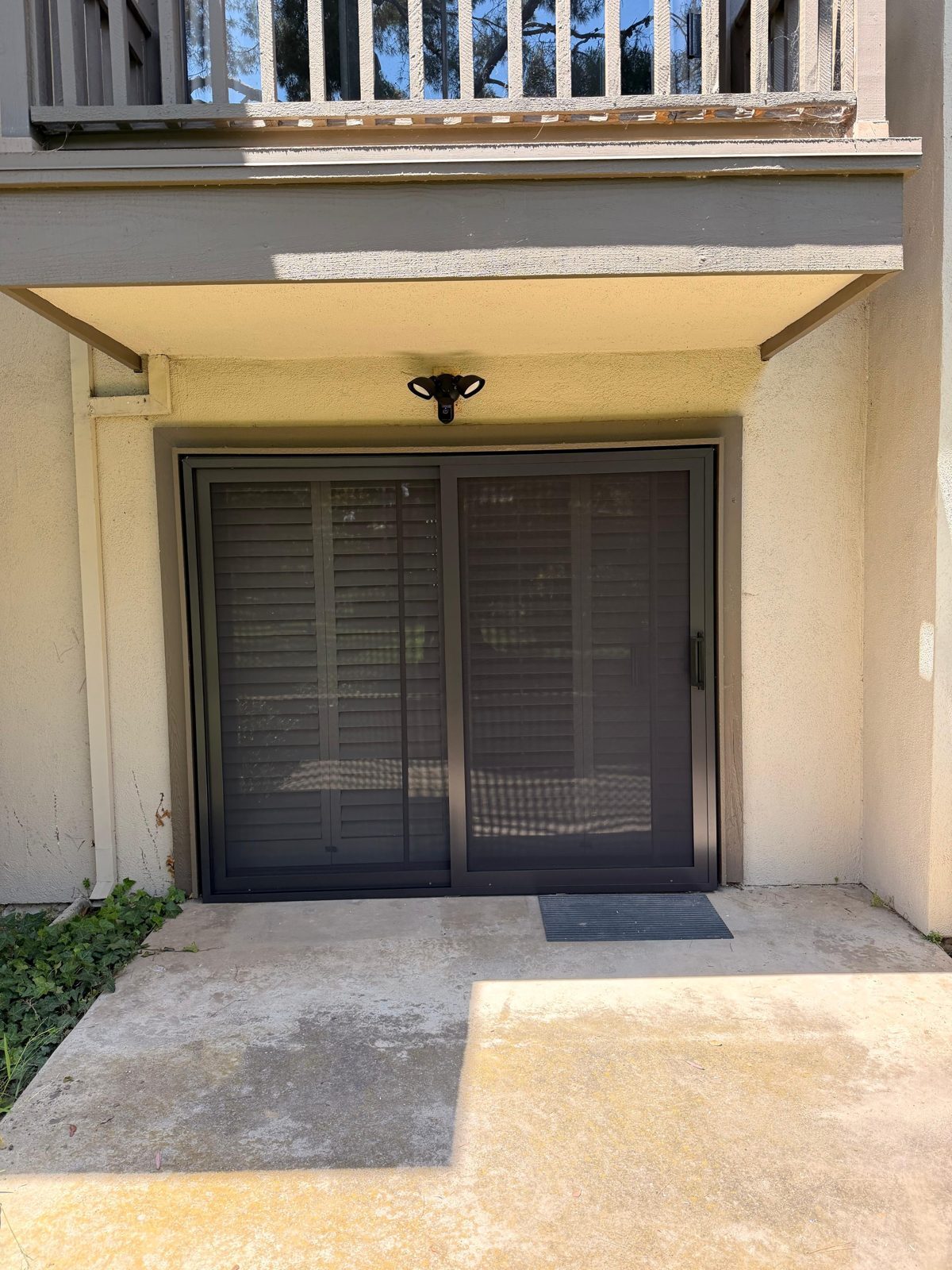
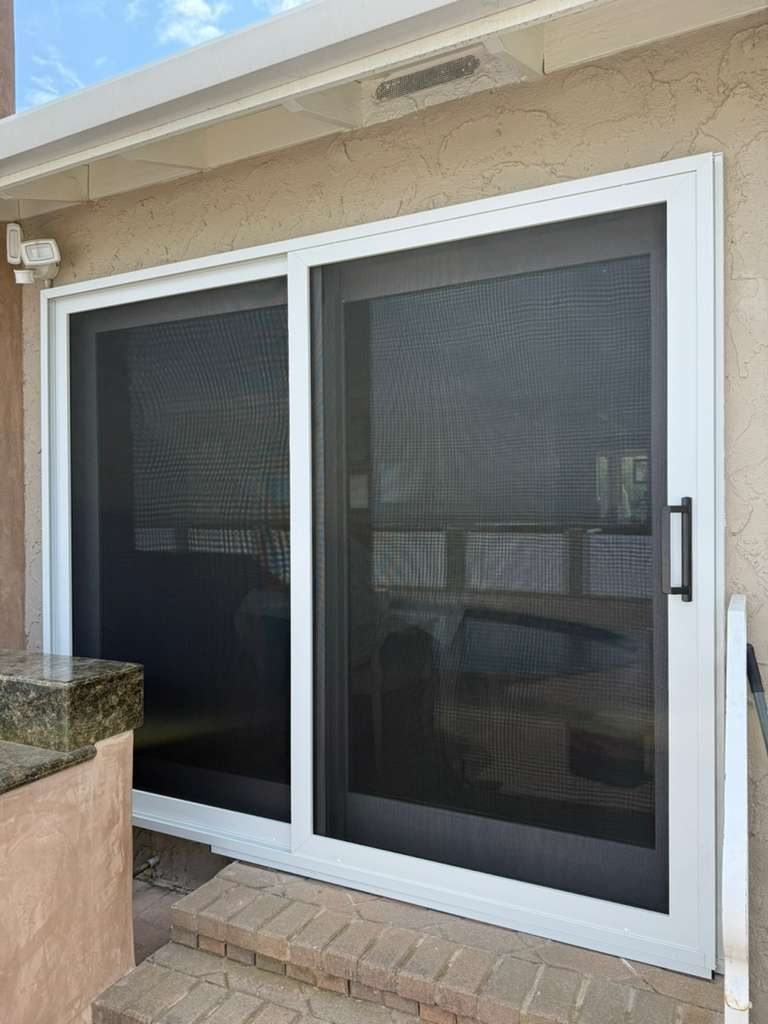
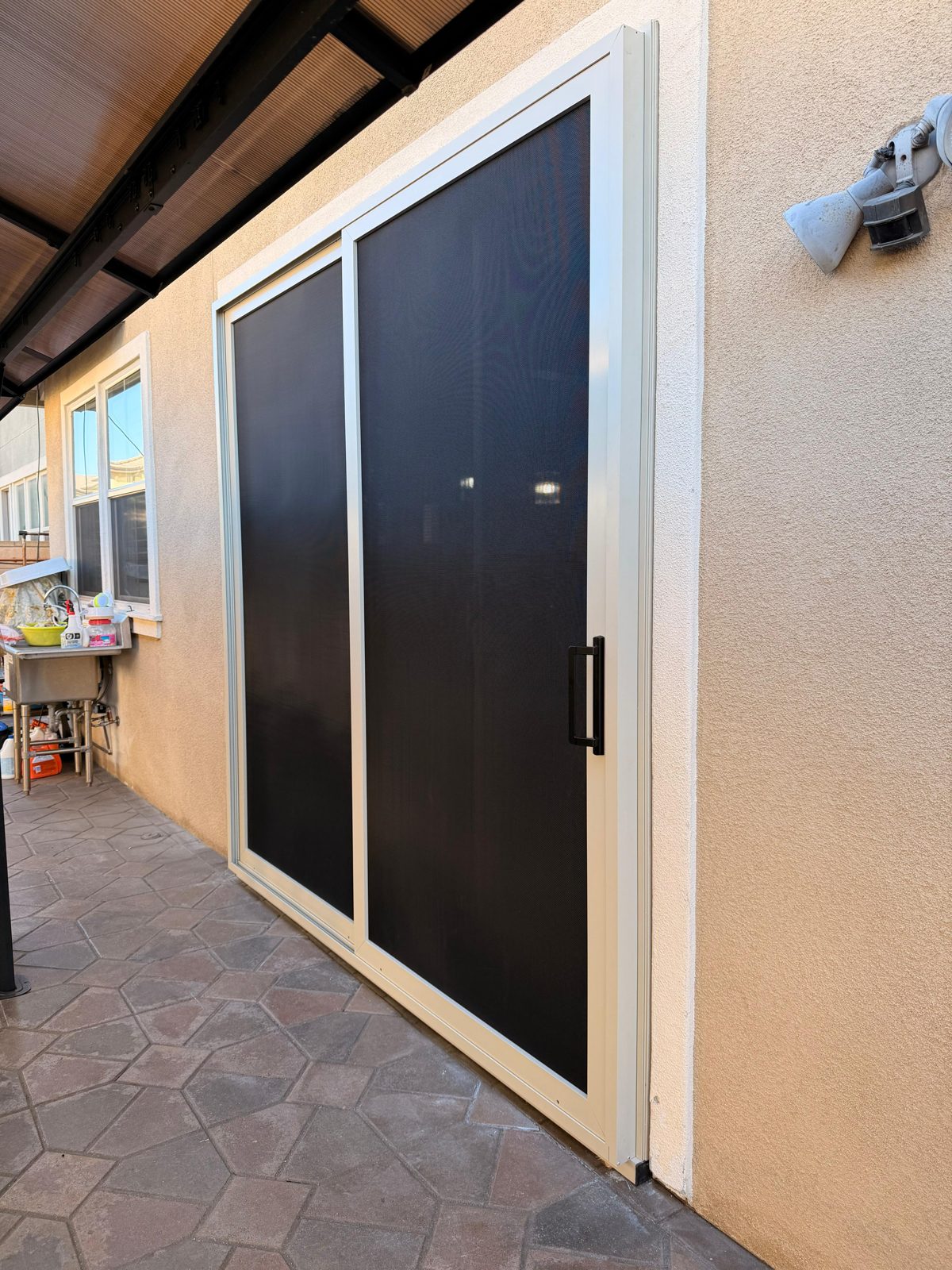
See more installation photos or read more about security screens for sliding glass doors.
What do customers say?
“Very happy with my security screens! I had them installed on my slider, and now I feel so much safer. As a bonus, I can even sleep with the doors open”Kimi K. · Google review
“Nice solution for security purpose! The installation was smooth and quick. Highly professional team.”Igor L. · Google review
4.9 on Google from 35 reviews. Read more reviews.
Frequently asked questions
How do I secure a sliding glass door from break-ins?
Lock the latch every time, block the track with a bar or dowel, and add anti-lift screws to the top track to help stop the door from being lifted out. To keep the door open for air and still protected, lock a security screen in front of it. Boss Security Screens OC installs security screens for sliding glass doors across Orange County and nearby Long Beach, Cerritos, Lakewood, Whittier, Hacienda Heights, Downey and Norwalk, with a 15-year warranty on product and labor.
Is a dowel in the track enough to secure a sliding glass door?
No, not on its own. A dowel stops the door from sliding, but it does nothing if someone lifts the door out of its track, and it has to come out every time you want the door open. Pair it with anti-lift screws in the top track and a pin lock.
Are sliding glass doors easy to break into?
Often, yes. Standard glass sliders can be easily pried open or even lifted right off the track, and they usually face a backyard nobody can see from the street. A locked latch, a track bar and anti-lift screws make a closed slider far harder to beat.
How do I lock a sliding glass door from the outside?
Only with a keyed lock, and many sliders don’t have one. Either set the latch and the track bar from inside and leave through another door, or add a keyed patio door lock.
Is a pin lock or track stop enough to leave a sliding glass door open for air?
Not on its own. A pin lock set in a second hole, or a stop fixed in the track, keeps the door from being pushed any wider, but it holds only as well as the frame it is fixed to, and a few inches is all the air you get. To open the glass all the way and keep the opening locked, lock a security screen in front of it.
Does a security screen replace my sliding glass door?
No. Our security screens for sliders mount on the outside of your existing slider, so you keep the glass door you have. See sliding door security screens.
Ready to secure your slider? See sliding door security screens, the full price list and customer reviews, or book a free consultation.
Call or text (714) 716-2036 · Mon–Sat until 7 pm · License #1132573
